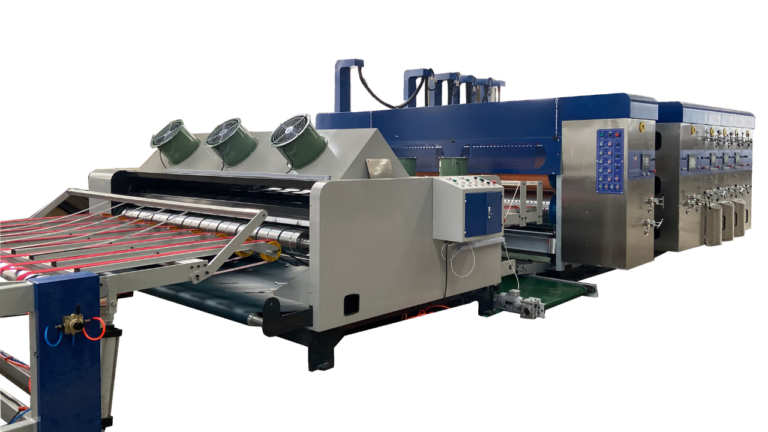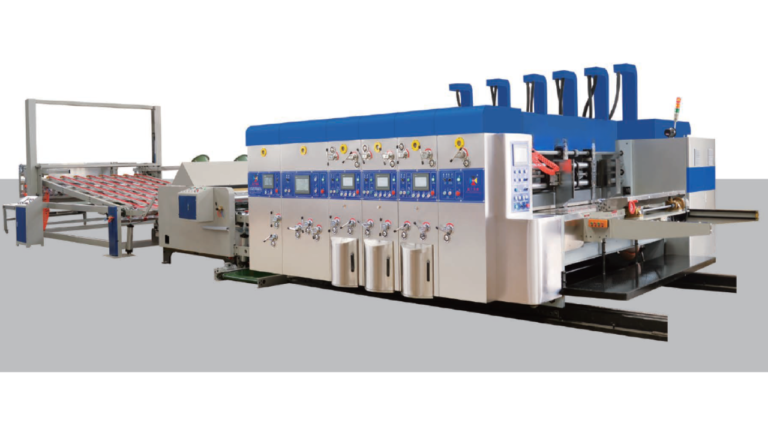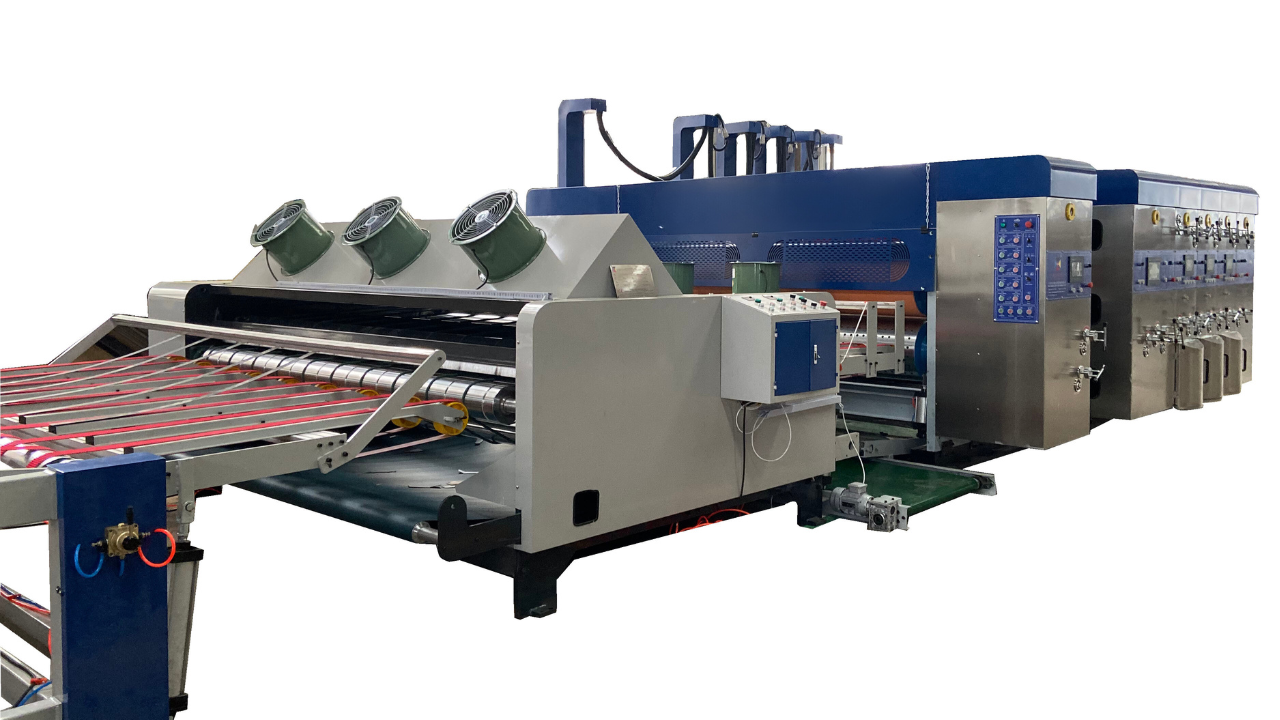
Model EKS-200XYH is High Speed Flexo Printer Slotter Machine with Rollers Transfer
Operating Principle: It uses rollers to move the cardboard along the transfer path. The rollers can be motorized or mechanically driven to push or pull the cardboard through the machine.
| Feature | Value |
|---|---|
| Economic speed | 0-180 pieces/min |
| Maximum paper size | 1200 x 2750 mm |
| Skip feeding size | 1400 x 2750 mm |
| Minimum paper size | 350 x 650 mm |
| Maximum printing size | 1200 x 2600 mm |
| Corrugated board | B, C, E, A/B, B/C, A/B/C (1.7 mm – 13 mm) |
| Printing plate thickness | 3.94 – 7.2 mm |
| Diameter of printing roller | 405 mm (with printing plate) |
| Diameter of die cutter roller | 360 mm (without wood die) |
| Diameter of die cutter roller | 410 mm (including die) |
| Cardboard thickness | 1.8 mm – 12 mm |
| Printing registration precision | ≤ ±0.50 mm |
| Slotting precision | ≤ ±1.0 mm |
| Die-cutting precision | ≤ ±1.5 mm |
| Min slotting depth | 7 x 320 mm |
| Min slotting distance | 160 x 160 x 160 x 160 mm, 300 x 100 x 300 x 100 mm |
| Frame thickness | 60 mm |
| Weight of machine | 35 TON |
| Total power | 75 KW |
| PLC/Inverter/Touch Screen | Delta |
| Electrical components | Schneider |
| Main motor | ABB |
| Bearings | NSK/HRB |
| Solenoid valve | AIRTEC |
| Gear material | 20CrMnTi (carbon steel alloy with chromium, manganese, and titanium) |
| Anvil cover materials | MAXDURA/POLICART |
| Voltage | 220V, 380V, 440V |
Advantages:
- Simplicity: A simpler and less expensive system to implement and maintain compared to vacuum transfer.
- Robustness: Generally more robust and suitable for handling thicker and stiffer cardboards.
Disadvantages:
- Precision: May offer less precise control, especially with thinner or more flexible cardboards that can slip or deform.
- Wear: Rollers may wear out over time, requiring periodic replacements.
- Potential Damage: Continuous mechanical contact can damage delicate surfaces or create folds and marks on the cardboard.
Comparison and System Choice: The choice between vacuum transfer and roller transfer systems depends on various factors, including:
- Type of Cardboard: For thin or delicate cardboards, vacuum transfer is usually preferred for its precision and gentleness. For thicker and stiffer cardboards, roller transfer systems can be sufficient and more cost-effective.
- Required Precision: If precise cardboard positioning is crucial, vacuum transfer is the better choice.
- Cost and Maintenance: If budget constraints exist or a simpler system is preferred, roller transfer may be more suitable.
This EKS-200XYH model offers a robust and economical solution for handling thick and rigid cardboards, while considerations about precision and maintenance management over time are important.
It is also ideal for the production of pizza boxes and printing on coated cardboard.